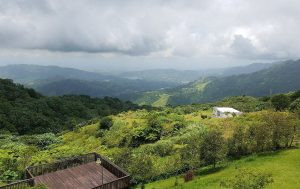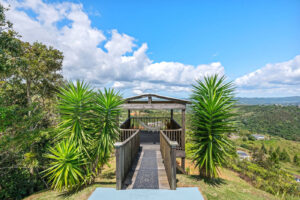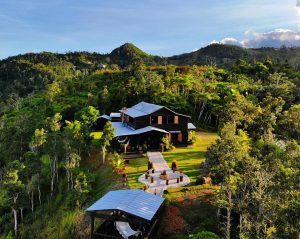
Walk the land at Finca Quebrada Seca and you won’t find manicured rows or a decorative garden. What you’ll find is a working finca — young coffee coming up under the shade of plantains, cacao just taking root, fruit trees spaced across the slope. Coffee and plantains in Puerto Rico have grown side by side for generations, and here they’re the starting point for a property that’s still being planted, season by season. This is a look at what’s in the ground, and why it’s there.
Why coffee and plantains in Puerto Rico grow together
The pairing isn’t decorative. It’s how coffee has been grown in these mountains for well over a century.
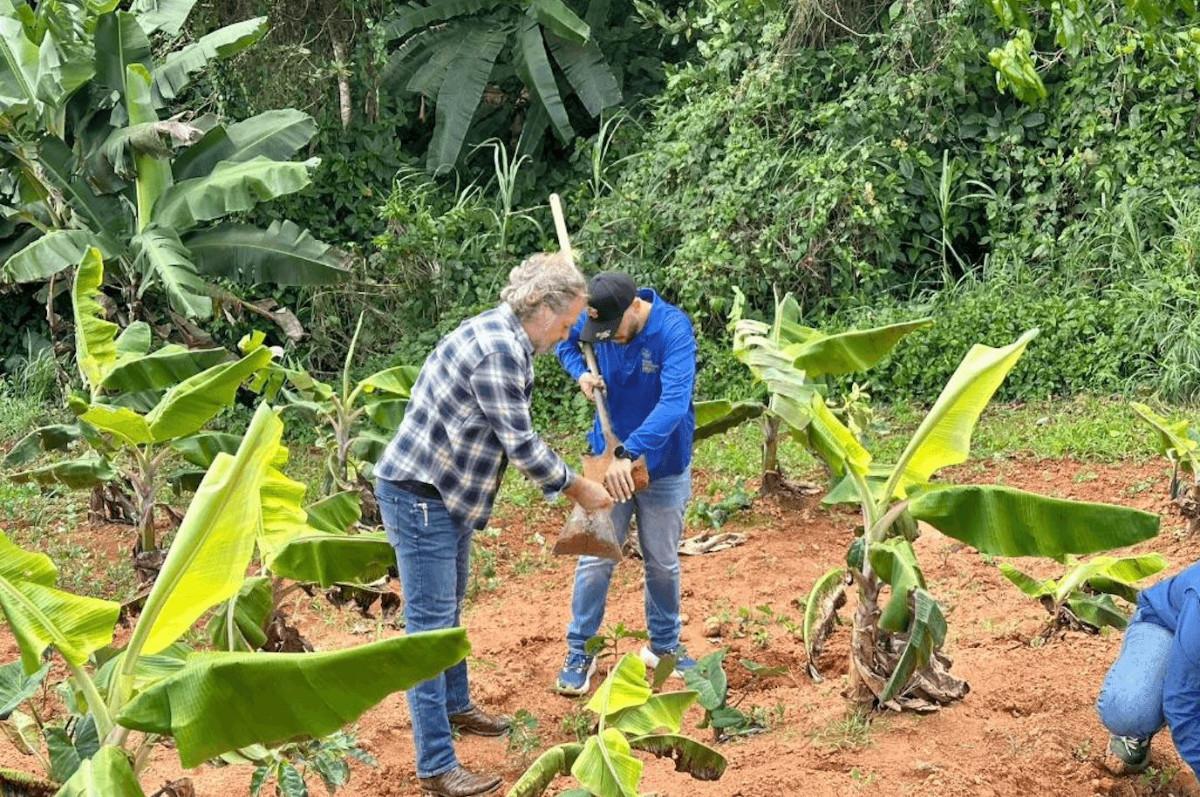
Coffee is a shade plant by nature. Young coffee especially doesn’t want full tropical sun — it does better with something taller growing above it, filtering the light and holding moisture in the soil. Plantains do that job well. They grow fast, throw out wide leaves, and give the coffee beneath them the cover it needs while it matures. In return, the ground stays shaded and less prone to drying out. Two crops, one system.
At the finca, that system is planted at real scale: 500 coffee plants coming up under 650 plantains, with the plantains established first to do their part. Orocovis and the surrounding central mountains were coffee country long before they were anything else — the elevation, the cooler air, and the volcanic soil are the same conditions that made this region one of the island’s historic coffee zones. Growing the two together here isn’t an experiment. It’s the old way, continued.
Cacao, bananas, and the fruit trees taking root
Coffee and plantains are the backbone, but they’re not the whole picture. A lot of what’s growing here is newer — recently planted, still finding its footing.
There are 70 cacao plants in the ground now. Cacao likes the same warm, shaded, humid conditions the coffee does, and it’s part of a slower plan: a crop that takes years to come into its own but belongs in these mountains. Alongside them, 45 native and exotic fruit trees are spread across the property — a mix meant to mature into something you can actually eat from as you walk the land.
There are bananas too, and they’re worth separating from the plantains, because people mix them up constantly. Plantains are starchier, cooked more often than eaten raw, and treated more like a vegetable — the ones you fry for tostones or turn into mofongo. Bananas are sweeter and usually eaten straight off the peel. They look like cousins on the plant, but in the kitchen they do very different jobs. The finca grows several banana varieties, each on its own cycle.
All of it was locally sourced — plants that came from these mountains or ones like them, rather than shipped in from somewhere else. For a property built around working with the land instead of against it, where the plants come from is part of the point.
The medicinal plants on the property
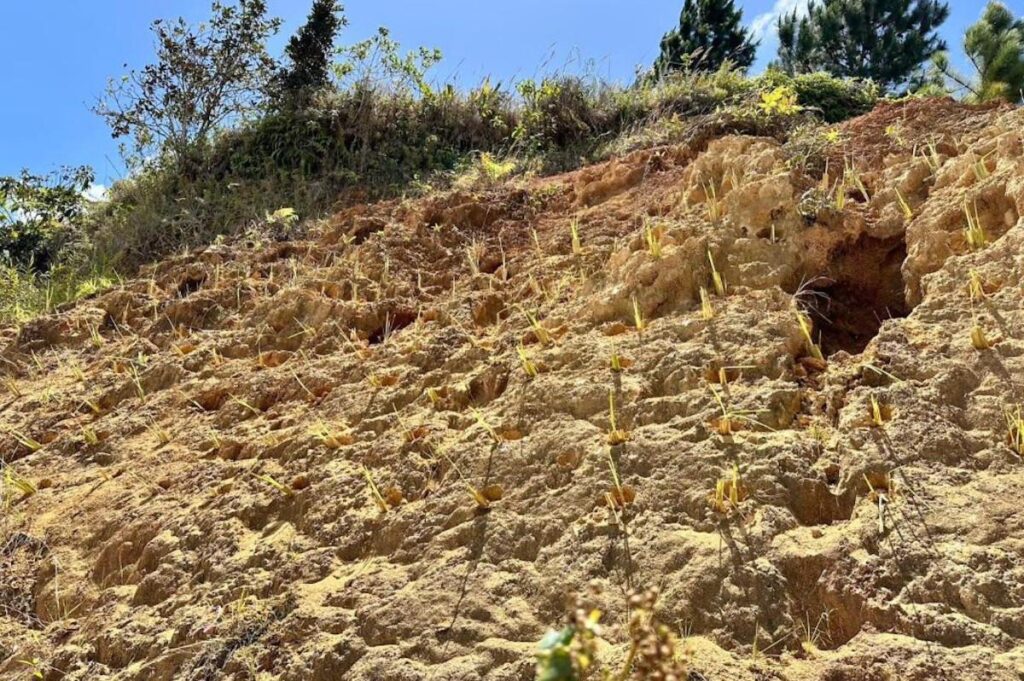
Not everything growing here is planted for the kitchen. Medicinal plants grow across the property too — the kind mountain families in Puerto Rico have used for generations for teas, remedies, and everyday ailments.
We won’t pretend to be herbalists or make claims about what any of it can do. But these plants are part of the fabric of rural life in the interior, and they’re part of what grows at the finca. Guests who know what they’re looking at tend to spot them; those who don’t can ask. Either way, they belong here as much as the coffee does.
The garden and the food it’s meant to grow
The newest project is the huerta — a kitchen garden taking shape on the property, planted with the idea that some of what ends up on the table should come from a few steps away.
The vision behind it is simple: fresh food, grown on-site, cooked and shared here. Picture a pot of something slow-cooked over a fire made partly from what was picked that morning. That’s the direction. It’s early, and a garden takes time to become that, but the intent is already shaping how it’s being planted.
For events held at the finca, this is where the agriculture stops being background and becomes part of the day. A celebration in a place that grows its own food has a different texture than one catered entirely from off-site. The finca works on a bring-your-own model, so nothing is imposed — but the option to build a meal around what’s growing here is one of the things that makes the setting what it is.
What any of this has to do with staying here
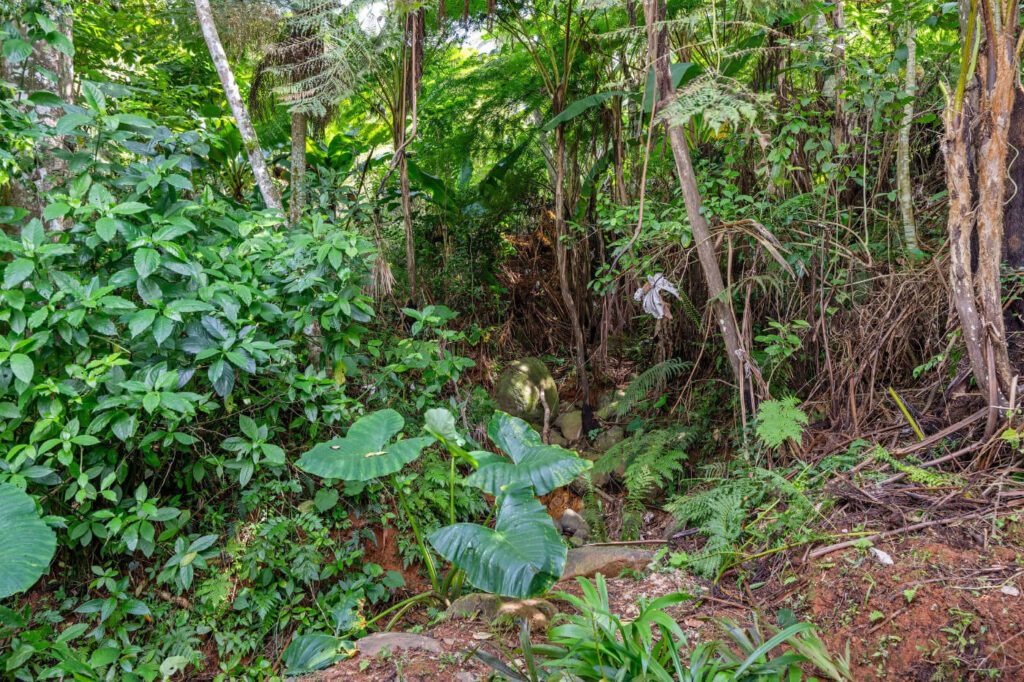
It would be easy to treat the plants as scenery — nice to look at, not much more. But at an off-grid property, what grows is closer to the center of things.
The finca runs on solar power and its own systems, and the land isn’t decoration around the buildings — it’s the reason the place exists the way it does. The coffee, the plantains, the cacao, the garden: they’re what make this a finca and not just a house in the mountains. Spending time here means spending time in the middle of that, at whatever stage it happens to be in.
None of it is finished, and that’s part of the character. A working property is always partway through something. What you see on one visit won’t be exactly what you see on the next — another reason the place rewards paying attention.
A place that grows its own food
Finca Quebrada Seca is an off-grid property in the mountains of Orocovis, planted with coffee, plantains, cacao, and more, and open to guests, gatherings, and events. If a place that grows its own food and runs at its own pace sounds like your kind of setting, we’d be glad to hear from you.
Learn more about hosting a celebration with us on our events page, or get in touch to ask about a stay.