Guest count gets decided early and then quietly runs the whole wedding. Invite 150 people and you’ve chosen a certain kind of day — a hall, a stage, a schedule that moves on cues. Keep it to 50 or fewer and almost everything changes, not because a small wedding in Puerto Rico is a scaled-down version of a big one, but because it’s a different event entirely. This is a look at what that smaller day actually feels like, past the word “intimate” that every venue uses.
What “Small” Actually Means
Fifty guests isn’t a rule; it’s roughly where a wedding stops being a production and starts being a gathering.
Under that number, you can take in the whole room at once. You end the night having actually spoken with the people who came, not waved at them across a reception hall. The couple isn’t performing a timeline for a crowd — they’re hosting people they know. Some land at thirty, some at fifty, a few at sixty; the exact figure matters less than the shift that happens somewhere in that range, where the event stops being about managing a crowd and starts being about spending time with it.
What a Small Wedding in Puerto Rico Actually Looks Like
A few things tend to be true once the list is short.
The day breathes. Without a big crowd to move through dinner, speeches, and dancing on a strict clock, the schedule loosens. Courses take their time. People linger at the table instead of being ushered to the next thing. Nobody is working a room of two hundred, so the afternoon stops feeling managed and starts feeling like a long, good meal that happens to have vows in the middle of it.
The details get personal. At fifty guests you can do things that don’t scale to a hundred and fifty — handwritten place cards, a meal that’s genuinely cooked rather than plated at volume, a playlist chosen for the actual people in the room. The wedding ends up specific to the couple, because at that size it can be.
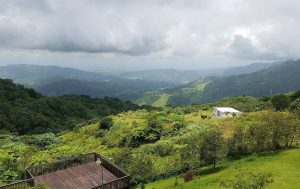
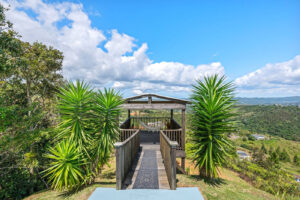
And the setting carries more weight. With fewer people and less production between the guests and the place, where you are becomes a bigger part of the day. A small wedding in a mountain setting leans on the surroundings themselves — the cooler air, the long views, the quiet that a coastal resort can’t offer — in a way a large ballroom event rarely does. It’s part of why some couples choose the mountains over the beach in the first place.
The Destination-Wedding Reality
Here’s the part that’s specific to getting married on the island: most small weddings in Puerto Rico are, in practice, destination weddings. The couple might live in San Juan or stateside, but a good share of the guest list is flying in.
That’s less daunting than it sounds, and it’s a real reason couples choose Puerto Rico. For travelers from the US mainland, it’s a destination wedding with none of the friction — US citizens need no passport, there’s no currency to exchange, phones work normally, and flights land at San Juan a couple of hours from almost anywhere in the States. You get the feel of somewhere far away without asking your guests to navigate somewhere genuinely foreign.
A small list is what makes the travel side workable. Coordinating flights, lodging, and a weekend schedule for fifty people is manageable; doing it for a hundred and fifty is a second full-time job. And because those guests are already making a trip of it, a small wedding tends to want to be more than one day.
When the group can stay on or near the property, the celebration naturally stretches into a full weekend together — a welcome dinner the night before, the wedding itself, a slow breakfast the morning after before everyone scatters. For people who crossed water to be there, that extra time is usually the whole point.
The One Thing to Get Right: Scale

The quiet risk with a small wedding is space. Fifty people can feel warm and full in the right setting and thin in the wrong one — a group that size dropped into a room built for two hundred reads as a party that didn’t quite come together.
The fix is simple to say and easy to overlook: match the venue to the number. A space designed for smaller groups makes fifty guests feel like the right amount of people rather than a short turnout, and it changes the photos, the sound of the room, and the energy of the night. It’s the detail couples most often miss when they fall for a venue that looks beautiful online but seats three times what they’re actually inviting. Ask what a room or a lawn feels like at your specific count, not its maximum.
The Parts that Get Easier — and The Parts that Don’t
A smaller wedding simplifies some things and complicates others, and it’s worth being straight about both.
What gets easier is coordination. Fewer guests means fewer moving parts, more venue options — small groups fit private properties a big wedding can’t — and the freedom to put money into the experience rather than into sheer headcount. A budget split across fifty people simply goes further than the same budget stretched over a hundred and fifty.
What doesn’t get easier is the list itself. The hardest part of a small wedding is almost always deciding who’s on it. Fifty seats fill fast once you count family, and the pressure to add one more cousin or one more coworker is constant and personal. “Small” isn’t a decision you make once — it’s one you keep making, sometimes against what people expect of you. And smaller doesn’t automatically mean cheaper: a per-head cost can actually climb when more care goes into each plate and detail, and a destination weekend carries its own costs.
Who it Suits
A small wedding tends to fit couples who’d rather be present than on display — who want to spend the day with their people instead of hosting a room full of acquaintances. It suits anyone drawn to a celebration that feels closer to the best dinner of their lives than a staged event, and anyone who likes the idea of a weekend with their closest people in one place rather than a few hours in a banquet hall.
It fits less well when a large guest list is part of what the day is meant to be, or when family expectations make a tight number more stressful than it’s worth. Neither is the right answer on its own — they’re just different weddings, and the guest count is how you choose between them.
A Venue Built for the Smaller End
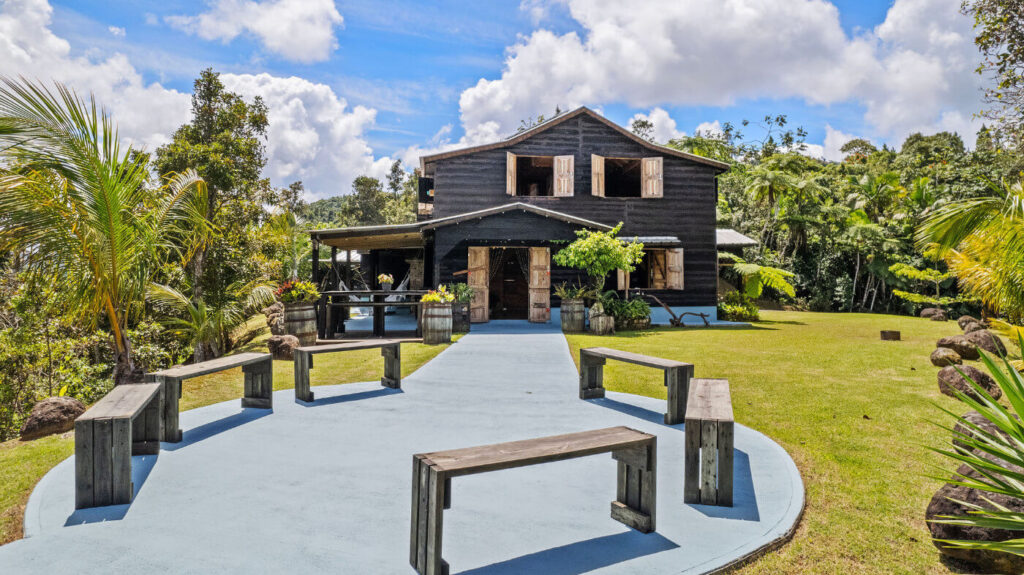
Finca Quebrada Seca is designed for exactly this scale — a private venue in the mountains of Orocovis built around roughly fifty guests, with room on the property for the weekend version of the day. It’s a blank canvas rather than a packaged wedding, which is what makes the personal, unhurried kind of celebration possible in the first place.
If a smaller wedding is the one you’re picturing, our events page has the details, or you can get in touch to talk through what you have in mind.